
Instead, They Danced With Joy
An Event of Love
Abstract
This essay Instead, They Danced With Joy deals with concepts from productive misreading to writing as a mode of becoming-spider, through what dance means and where lies joy in dance. It is an attempt to trace the contours of an encounter— love is nothing but the encounter, Lacan says—between Deleuze, Lacan and Žižek.1 This essay applies a Lacanian modus operandi2 to deal with the problems at hand—namely that of, philosophy as this one big dance party.
Every beginning is difficult.3
And just to get things going, let me start by presenting a point:
As Alain Badiou put it, philosophy is inherently axiomatic, the consequent deployment of a fundamental insight. Hence, all great “dialogues” in the history of philosophy were so many cases of misunderstanding: Aristotle misunderstood Plato, Thomas Aquinas misunderstood Aristotle, Hegel misunderstood Kant and Schelling, Marx misunderstood Hegel, Nietzsche misunderstood Christ, Heidegger misunderstood Hegel. . . . Precisely when one philosopher exerted a key influence upon another, this influence was without exception grounded in a productive misreading—did not the entirety of analytic philosophy emerge from misreading the early Wittgenstein?4
What is the point here?
My accent is on this productive misreading.
What is a productive misreading?
Any reading, any transpretation (as to read is to transpret, to carry-in-between) is an abstraction.5 It turns something into Unbegriff6. This determinate negation can affirm immanence, i.e., it can make or break Flows. As Žižek masterfully declares,
Absence can exert a positive causal influence—only within a symbolic universe is the fact that the dog did not bark an event.7
So when we transpret, or when we abstract, we produce the potential for something new, something affirmative, something immanent. This is a productive misreading.8 9
Production of a new meaning, a new breed of minor tongue—a new concept, that is characteristic of a productive misreading. Production of something is not the same as production of something new. When we talk of production of something it is obviously not the production of anything at all, it is not the discourse of anything-goes. It rather imposes an ethical imperative, of a yearning for truth, a will to truth.
In the end, all a theorist can ever deliver us is tools in language, master-signifiers, something that Lacan called quilting points. Points where meanings converge (albeit a mirage) and bears signification. Each new discourse, à la philosophers, are a new language, a latent tool for us to weaponize. When we acquire this language, we acquire weapons, we weaponize ourselves with these new lines of flights.10
But "for what means" is the right question11. And this is a question I have no answer to. We are perhaps preparing for the future, for the radical invention of the Future12. This is why, I think, theory is a tradition, a passing down of tools.
Theory is not only a theory of practice, but a theory of why the practice ultimately fails, has to fail.13
Isn't the history of philosophy the very legacy (or tradition) of these misreadings, a Beckettian fail again. fail better?
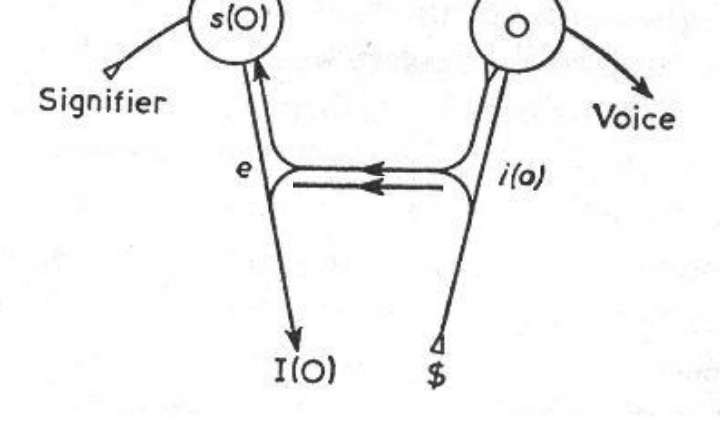
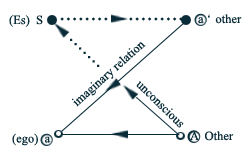
To misread is to reify—to go back and forth—to dance. Philosophy is a dance, it is inherently axiomatic14, ‘consequent deployment of a fundamental insight’, functioning as a reflexive mirror of production, like the semblancial circuit15 of Lacan's i(o)—e.
What is to dance?
To dance is to affirm the difference and enjoy the back and forth.
A dance combines the rhythmic vowels and consonants that correspond to the interior forces of creation16 as to the differentiated parts of an organism. There is a whole art of poses, postures, silhouettes, steps, and voices, composed of clicking of the beak, an exhibition of colors, a posture with neck outstretched, cries, smoothing of the feathers, bows, a refrain17.
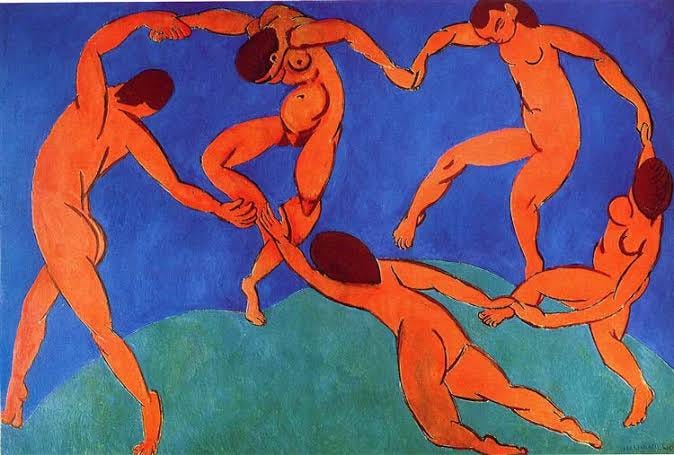
To dance is to animate bodies.
What is dancing?
Flights and encounters into vicissitudes of intensities filled with life and passion, flows and breaks, and their abstract bodily cuts.
What are these bodily cuts?
When a body moves along matrices of territorialities, it is carved, sliced or cut, these slices become assemblages of smooth space, of plateaus that rise from these space-slices18, open for acts in transpretation (or, acts in abstracts).
Where lies the joy in dance?
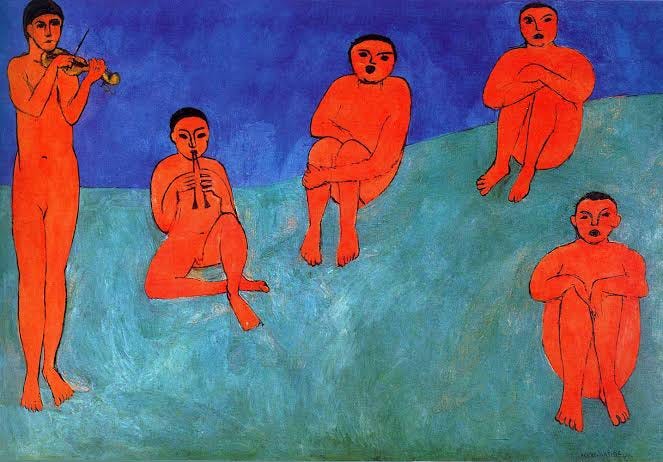
Joy is in the juice, when it flows. We call it in our petty business jouissance19.
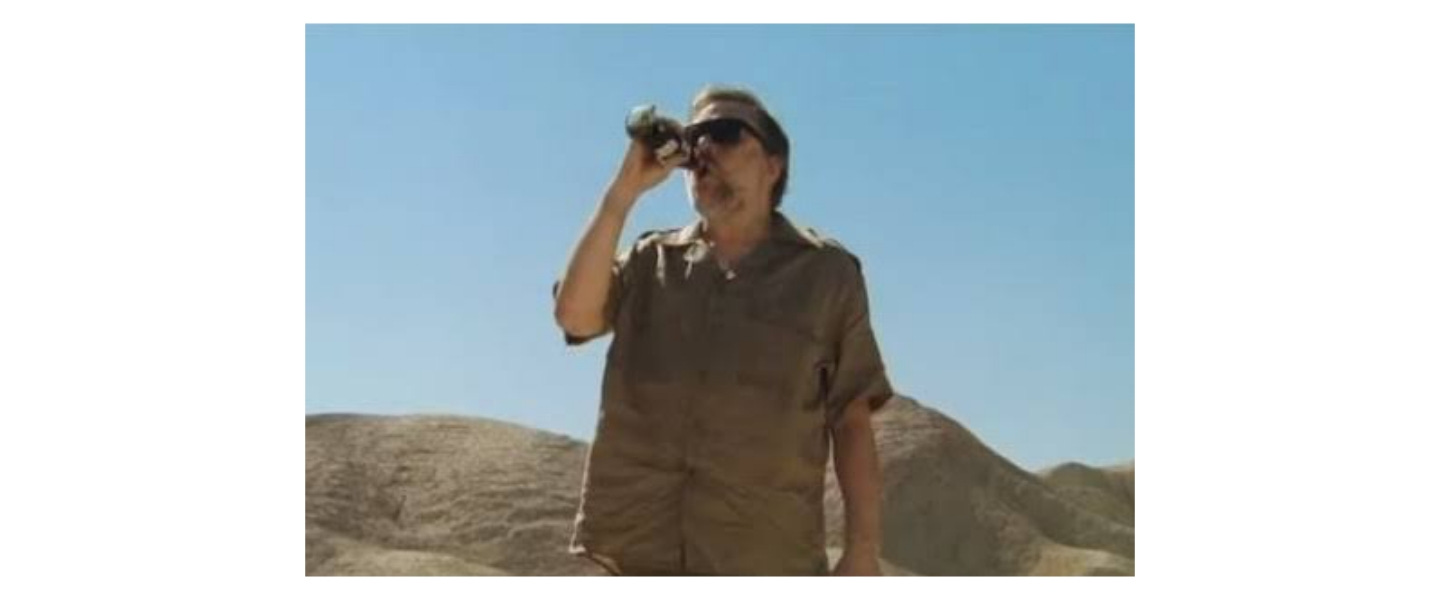
We are often advised to find joy in little things, enjoy your little cans of Coca-Cola20, your micro-perversions and meta-phantasies.
What is with this finding joy in little things?
Joy in little things?
Joy in little things, is this not the same as how Lacan defines the phallic jouissance? But let's not get ahead of ourselves.
There is no other mode of operating joy other than in/on the body itself. Body, a body marked by reality, marks up the boundaries of joy.21
Or as Lacan poetically remarks,
I have to pay for jouissance with a pound of flesh.22
In the Écrits he writes that “Desire is a defense against going beyond a limit in jouissance” (825).
Beyond a limit in jouissance is a beyond-body, a trans-organic lamella23, what Deleuze skillfully named body without organs, more on that later.
Where then is the place for phallus in this jouissance? Phallus refers not to the male organ, otherwise known as a penis24, rather it is a signifier25.
So, what does it signify? It signifies the lack of phallus. Yes, phallus signifies the lack of phallus itself, a lack which is a given. Žižek has elaborated on this point, we may share just the fragmented aphorism here,
… ‘symbolic castration’, as the phallus as its signifier.26
Let us not wander too far away from the enquiry, from Lacan himself we get that the phallus is a signifier, a ghost. It is the signifier of potency, of virility, of power itself.27 The insignia of potency that marks nothing but our impotency and virtual inefficacy—phallus as “an organ without a body2829.”
One of the most beautiful lines from Lacan's masterpiece The Subversion of the Subject is, “Castration means that jouissance has to be refused in order to be attained on the inverse scale of the Law of desire” (Éc., 827).
As the mark of a lack, the phallus allows us to enjoy only partially, with a ‘paltry’ jouissance. As Owen Hewitson from LacanOnline.com says in his article,
It is with this surplus that jouissance obtains a kind of ‘life of its own’. The excess invades or ‘irrupts’ as he puts it here, and leave us a surplus jouissance. Despite this ‘paltry’ phallic jouissance that we castrated subjects have to deal with, an excess of enjoyment – a plus de jouir – is generated in the place of castration. Lacan calls this a compensation for a loss, and we can think of it as a kind of ‘plus of a minus’ – what he names in Seminar VII as “something that necessitates compensation… for what is initially a negative number” (Seminar VII, p.50).30
In simple words, jouissance is limited not only by the body, but also by voice.
One cannot talk of joy enough, words fail31.
This is why, jouissance is interdicted (prohibited) to anyone who speaks, as such32.
So when there are so many prohibitions and limitations on joy, what is allowed of it is in the plus-joy33 of the object a.
What does this “plus-joy of the object a” mean?
Object a is the impossible object-cause of desire34, an assemblage of desiring-machines35.
Object a is not simply the common name for all the particulars of desire, which it undoubtedly is, but the very structure of desire itself.
Partial joy produces a surplus of itself for us to enjoy it in the first place.
Where is the joy in?
Joy-in, what a beautiful way to put it! Isn't this joy-in more important than a joy-in-xyz? Lacan also punned jouissance with joui-sens, joy-in-knowing.
Enjoyment is enjoy-meant.
The act of publicly reporting on something is never neutral; it affects the reported content itself… No less than the superfluous act of mentioning, the act of not mentioning or concealing something can create additional meaning. 36
The search for these plus-de-sens, surplus-knowledge or additional meaning, is in itself a will to jouissance, as “what is allowed of jouissance is in the plus-de-jouir (surplus-joy).”
Jouissance takes the form of this joui-sens (joy-in-sense). There is joy in sense, then37.
Now enough talking of the phallic jouissance, Jφ, there is another jouissance, the jouissance feminine, the jouissance of the Other, JA.
A joy not bound by the body and the voice, as an Other enjoyment beyond the phallus. We will not talk of that here today.
Haven’t we got the answer yet? What is finding joy in little things?
It is finding the +(-J) in the a. The object small a38 are tiny solutes, that dissolve in the solvent of our hearts.
If we accept the proper meaning of jouissance, orgasm, we can elaborate even more on this: we can't ejaculate for eternity, we have to fall into our bodily fatigues and accept the petite mort, the little deaths of orgasm.
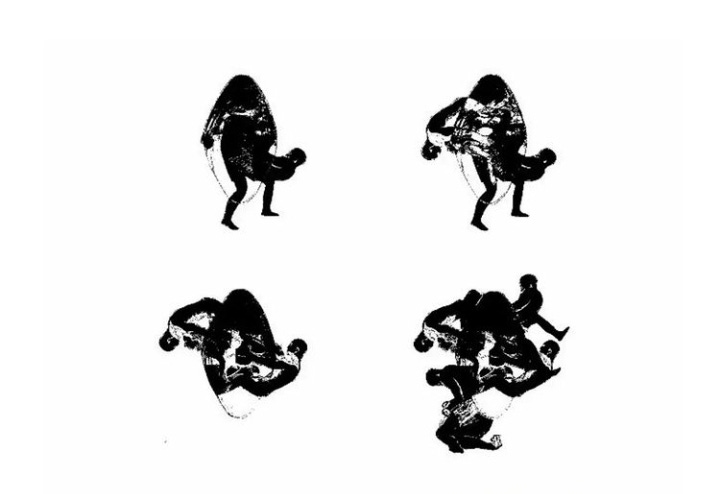
Coming back to the topic, isn't dancing then but a will to jouissance?
On the questions of joy, we often find Deleuze asking, what if this limit to jouissance is not the body itself, but its very organism? Which is why, the body without organs is not opposed to the organs, but to the organization, to the organism!
We come to the gradual realization that the BwO is not at all the opposite of the organs. The organs are not its enemies. The enemy is the organism. The BwO is opposed not to the organs but to that organization of the organs called the organism. 39
Deleuze warns us that becoming the body without organs ‘can be terrifying, and lead you to your death’ (TP, 149). And tells us what it really means to lose the organism:
Dismantling the organism has never meant killing yourself, but rather opening the body to connections that presuppose an entire assemblage, circuits, conjunctions levels and thresholds, passages and distributions of intensity, and territories and deterritorializations measured with the craft of a surveyor. 40
A dancer strives to lose their organisms, opening the body to connections that presuppose an entire assemblage, circuits, conjunctions levels and thresholds, passages and distributions of intensity, and territories and deterritorializations measured with the craft of a surveyor. A dancer is an animator of Life, a cartographer of smooth planes, of the production and activity of negative maps41.
Talking of limits, what has Deleuze to do with limits?
For me, Deleuze has always been this philosopher of limits—the limit.
But "limit" has many different meanings, since it can be at the beginning as an inaugural event, in the role of a matrix; or in the middle as a structural function ensuring the mediation of personages and the ground of their relations; or at the end as an eschatological determination.42
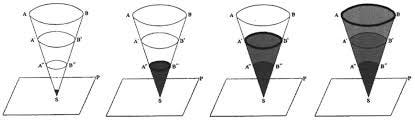
It is only in this last sense43 that Deleuze designs his limitism.
Elaborate on this limitism.
Oedipus is the universal of desire, undoubtedly—but it must turn into its own limit, be capable of its autocritique, its own anti-Oedipus44. Oedipus is the limit.45 Oedipus is at the limits of universal desire; similarly, desiring-production is at the limits of social production, decoded flows are at the limits of territorialities, the body without organs is at the limits of socius4647. He says,
You never reach the Body without Organs, you can't reach it, you are forever attaining it, it is a limit (TP, 150).
Schizophrenia, the exterior limit of capitalism48, is the absolute limit that causes the flows to travel in a free state on a desocialized body without organs. And capitalism is schizophrenic, but it is a relative limit49: continually drawing near the wall, while at the same time pushing the wall further away.
Deleuze has talked of an absolute limit every time the schizo-flows passed through a wall, scrambled all the codes, and deterritorialized the socius.50
Deleuze has always been a limitist!
What does this limit imply?
In his work, the limit designates a point of becoming insofar as one traverses towards the limit. This tends-to attribute reminds us of the limits in infinitesimal calculus.
How can we return to our topic ‘dance’ from here?
There is no such return, as we never left the dance at all. We were but dancing. Dancing is a will to jouissance, a will to become. A will to become-spider.
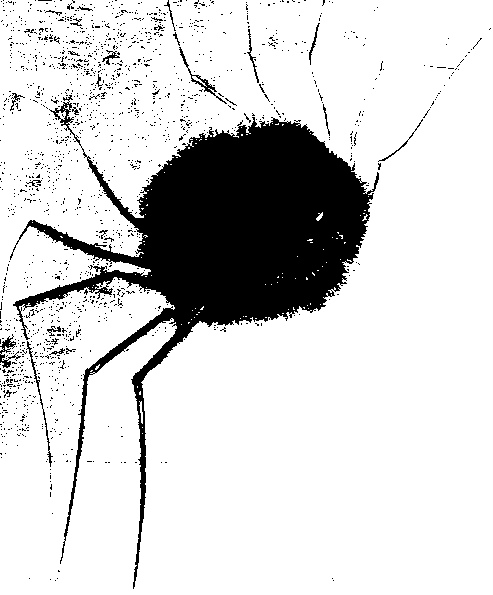
Dancing is a becoming-spider.
Let's end this pretension now.
In his own image for conceiving of the continuity between nature and culture, Lacan lights upon a figure conventionally characterised as feminine, the spider. In the ‘textual work’ that emerges from her body, one can see the web-traces of a kind of writing taking form ‘in which one can grasp the limits, impasses, and dead ends that show the real acceding to the symbolic’. Writing for Lacan is a mode of becoming-spider – as indeed it was for Deleuze, in a slightly different way.51
See? How ‘writing is a mode of becoming-spider’ to ‘grasp the limit’. It's interesting, how all of it unfolds and folds—leaving its ridges, cuts and contours.
Continued…
Deleuze memorably concludes Proust and Signs, his book on the famously agoraphobic author, by characterising the narrator of In Search of Lost Time as a spider. ‘The Search’ he writes, ‘is not constructed like a cathedral or like a gown, but like a web.’ This web is continuous with the narrator’s body which we may also suggest is continuous with the author’s persona who crystallises a certain block of affects and percepts – a fictional version of the person who is shaped out of various syntheses of perception, recollection and habit that ground consciousness and self-knowledge in states of fear, desire and auto-affection. Proust’s spider-narrator is pre-eminently a power of sensation. It perceives through feeling, and since it is blind, sees through touch, sensing and deploying its characters and objects in its web, making ‘them so many marionettes of his own delirium, so many intensive powers of his organless body, so many profiles of his own madness’. While it makes sense to call the narrator of The Search for Lost Time a spider, the most common phobic object, it is curious to then transform that into a schizophrenic. 52
We started with productive misreading only to end with the idea of writing as a mode of becoming-spider, through what dance means and where lies joy in dance.
But we must remember every movement of deterritorialization is exorcised through factitious and artificial reterritorializations, as a couplet. Deleuze warns us about the crushing of the magic triangle,
The voice no longer sings but dictates, decrees. The graphy no longer dances, it ceases to animate bodies, but is set into writing on tablets, stones, and books. The eye sets itself to reading. (Writing does not entail but implies a kind of blindness, a loss of vision and of the ability to appraise; it is now the eye that suffers, although it also acquires other functions.) 53
The graphy no longer dances, it ceases to animate bodies.
And talking of dancing and writing, how can one forget Nietzsche's dancing with the feet, with ideas, with words, and with the pen.54
Writing has nothing to do with meaning. It has to do with land surveying and cartography, including the mapping of countries yet to come.55
Bring something incomprehensible into the world!56 Become incomprehensible, become unassimilable, become ununderstandable!
All that is fine, but why name this essay Instead, They Danced With Joy?
This brings us back to the beginning.
Aristotle misunderstood Plato, Thomas Aquinas misunderstood Aristotle, Hegel misunderstood Kant and Schelling, Marx misunderstood Hegel, Nietzsche misunderstood Christ, Heidegger misunderstood Hegel.
The point is perhaps they didn't misunderstand each other. Instead, they danced with joy.
Their dance is
not a “dialogue” between … theories but something quite different: an attempt to trace the contours of an encounter... An encounter cannot be reduced to symbolic exchange: what resonates in it, over and above the symbolic exchange, is the echo of a traumatic impact. While dialogues are commonplace, encounters are rare.57
And what is this encounter?
So many questions… How does one encounter something or someone? What happens? What is the logic of encounter as such? Is not encounter as such surrounded by a kind of mystery, is it not an open question, a surprise, a shock even? Not only missed or traumatic encounters, but also the beginning of something beautiful like love – ‘love is nothing but the encounter’ – entail paradoxes, enigmas, open questions. In this sense, one could say that an encounter is an event in a more philosophical sense.58
Albeit, an event of love.
Who are these people?
Jacques Lacan is a French psychiatrist-turned psychoanalyst, famous for his defreudianization of Freud and Gilles Deleuze a French philosopher of capitalism and schizophrenia. And Slavoj Žižek is a Lacano-Hegelian cultural critic, philosopher and a pioneer in the Slovene psychoanalytic chumocracy.
Deleuze was indeed also a Lacanian, and even more than a Lacanian. He was a becoming-Lacan.
Karl Marx, 25-7-1867.
Slavoj Žižek, Introduction: An Encounter, Not a Dialogue, xix, Organs Without Bodies, 2012.
On abstraction, I remember a line from Jacques-Alain Miller, “the patheme—that which we suffer, that which affects us—is subjected to the matheme” (la Cause freudienne n°50, February 2002).
Not the non-concept, but the concept of a lack.
Slavoj Žižek, The Ticklish Subject, 35.
I am deeply indebted to a fellow traveller Cody Tatley. Her writings have moved me in ways many academic scholars couldn't. This very essay wouldn't be possible without her Discourse of the Schizophrenic: Nietzsche’s Dance of Philosophy. Find that essay in the link given below—
https://medium.com/@tatleycody/i-did-not-write-%C3%A9crits-in-order-for-people-to-understand-them-i-wrote-them-in-order-for-people-to-5efe8df1be6b
So when we misinterpret, or when we abstract, we produce the potential for something new. A "productive misreading". To us 'Deleuzians' we may simply call this; a reading. There is no misinterpreting, only interpreting.
Cody Tatley, Discourse of the Schizophrenic: Nietzsche’s Dance of Philosophy.
There is no need to fear or hope, but only to look for new weapons.
Gilles Deleuze, Postscript on the Societies of Control.
…with regard to freedom, Lenin is best remembered for his famous retort “Freedom yes, but for WHOM? To do WHAT?”
Slavoj Žižek, Can Lenin Tell Us About Freedom Today, see https://www.lacan.com/freedom.htm
…what is it going to be like in the future? We don’t know, we have to invent it.
Mark Fisher, We Have To Invent The Future, https://thequietus.com/articles/21616-mark-fisher-interview-capitalist-realism-sam-berkson
It is crucial that Freud was very well aware of the proper dialectic tension between theory and practice. In what sense? In the sense that psychoanalytic theory is not only a theory of practice, but a theory of why the practice ultimately fails, has to fail. Or, as Freud put it, ‘The only society in which psychoanalysis would have been really possible, as successful, is a society which wouldn’t need psychoanalysis’. So the theory is not only a theory of practice, it is also a theory of why practice ultimately fails, and this theory is of Unbehagen in der Kultur.
My point is that I don’t think you would get an entire social programme from psychoanalysis. What you can get is just this indication of how the key to the problem is social/symbolic global organization itself, so that change has to be at that level. Psychoanalysis just does this elementary job of showing how there is a gap, a failure, a nonfunctioning excess in society. But then, about what to do, he leaves it open. We cannot jump from here directly to positive programs. This then opens up all possible versions.
Slavoj Žižek, Unbehagen and the Subject: An Interview, Birkbeck Institute for the Humanities, 18 June 2008.
Axiomatic in the sense of the Žižekean maxim You need to believe in it to see it, philosophy demands this fidelity, this Pascalean wager, this leap of faith. The force of thought is a matter of style and not the specification of concepts.
Both the I, the ego, and the body-image originate in the extimate: that is, constructed upon alienation. The body-image is the image of the other, the ego-ideal (the identity), the i(o). This forms: i(o)—m, which is the formula of semblance, the short-circuit of the double-imaginary.
D&G, TP, 311.
D&G, TP, 323.
A plateau is a piece of immanence. Every BwO is made up of plateaus. Every BwO is itself a plateau in communication with other plateaus on the plane of consistency. The BwO is a component of passage.
D&G, TP, 158.
Which is not orgasm, not pleasure, rather the Unbegriff of pleasure itself, a twisted unpleasure closer to pain than pleasure itself.
Under the hot sun, Slavoj Žižek uncaps a bottle of Coca-Cola and takes a large swig. “Oh my god,” he says. “One is thirsty in the desert, and what to drink but Coke?” He goes on to provide a Marxist analysis of Coke as a quintessential commodity. “It was already Marx who, long ago, emphasised that a commodity is never a single object that we buy and consume,” he explains. “A commodity is an object full of theological, even metaphysical niceties. Its presence always reflects an invisible transcendence.”
To put it aphoristically, “jouissance is the jouissance of the body, but the limit to jouissance is the body itself.”
Jacques Lacan, The paradoxes of ethics or Have you acted in conformity with your desire?, Seminar 7, 322.
In short, the lamella is the infinitely plastic object that can transpose itself from one to another medium: from excessive (trans-semantic) scream to a stain (or anamorphic visual distortion). Lacan has elaborated on the lamella, the Manlet, in Écrits, p. 717-18.
I remember a joke on penis from Peter Lehman's Running Scared: Masculinity and the Representation of the Male Body (119),
The joke involves Freud. His daughter, who has never seen a penis, asks him what one looks like. He drops his pants and shows her. “Oh,” she responds, “like a phallus, only smaller.”
…the phallus is not the penis as an organ but as a signifier.
SŽ, OwB, 76.
Slavoj Žižek, The Interpassive Subject: Lacan turns a prayer wheel, How To Read Lacan, 34.
Jacques Lacan, Seminar VI, 50-1.
Slavoj Žižek, The Interpassive Subject: Lacan turns a prayer wheel, How To Read Lacan, 34.
What if, then, phallus itself, as the signifier of castration, stands for such an organ without a body?
SŽ, OwB, 74.
Owen Hewitson, ‘From a Tickle to an Inferno: The Theory of Jouissance in Psychoanalysis,’ The School of the Freudian Letter, Cyprus, May 2015.
…words fail.
(JL, Television, 3).
We must keep in mind that jouissance is prohibited [interdite] to whoever speaks, as such—or, put differently, it can only be said [dite] between the lines by whoever is a subject of the Law, since the Law is founded on that very prohibition [….] But it is not the Law itself that bars the subject’s access to jouissance—it simply makes a barred subject out of an almost natural barrier. For it is pleasure that sets limits to jouissance, pleasure as what binds incoherent life together, until another prohibition – this one being unchallengeable — arises from the regulation that Freud discovered as the primary process and relevant law of pleasure.
JL, Écrits, 821.
The plus of a minus, +(-x)=-x?
Jacques Lacan. Le Séminaire. Livre XX. Encore, 1972-73. Ed. Jacques-Alain Miller. Paris: Seuil, 1975. p. 77.
D&G, Anti-Oedipus, p. 27 (footnote),
Lacan's admirable theory of desire appears to us to have two poles: one related to "the object small a" as a desiring-machine, which defines desire in terms of a real production, thus going beyond both any idea of need and any idea of fantasy; and the other related to the "great Other" as a signifier, which reintroduces a certain notion of lack.
Slavoj Žižek, Empty Gestures and Performatives, How To Read Lacan, p. 18-9.
… of jouis-sens (enjoy-meant) which you can write as you wish, as is implied by the punning.
JL, Television, 10. Lacan's footnote: Jouis-sens, homonym of jouissance.
The small a stands for the word ‘other’ in French (autre). It denotes the small other in Lacan’s algebra. The little other is the other who is not, in fact, other, but a reflection or projection of the ego. This is why the symbol a can represent the little other and the ego interchangeably in schema L.
The organism is the articulation of a body into a hierarchic-harmonious Whole of organs, each “at its place,” with its function.
D&G, A Thousand Plataeus, 158.
Negative maps are the productions of third terms, of smooth space and also its destruction.
Negative Maps: Minor Language Games and Psychosis, Cody Tatley, https://www.academia.edu/resource/work/75585833
D&G, A-O, 175.
Eschatological determination, that concerns death.
Yes, Oedipus is nevertheless the universal of desire, the product of universal history—but on one condition, which is not met by Freud: that Oedipus be capable, at least to a certain point, of conducting its autocritique.
D&G, Anti-Oedipus, 271.
ibid, 175.
…the body without organs is the limit of the socius.
D&G, Anti-Oedipus, 281.
ibid, 176.
… schizophrenia is the exterior limit of capitalism itself.
ibid, 246.
Schizophrenia is the absolute limit, but capitalism is the relative limit.
ibid, 176.
ibid, 176.
D&G, A Thousand Plataeus, 160.
Scott Wilson, Zoophobia, ‘Gnomonology: Deleuze’s Phobias and the Line of Flight between Speech and the Body.’
D&G, Savages, Barbarians, Civilised Men, A-O, p. 205.
Dancing in all its forms cannot be excluded from the curriculum of all noble education; dancing with the feet, with ideas, with words, and, need I add that one must also be able to dance with the pen?
Friedrich Nietzsche, Twilight of the Idols.
D&G, TP, 5.
ibid, 378.
Slavoj Žižek, Introduction: An Encounter, Not a Dialogue, xxi, Organs Without Bodies, 2012.
Peter Klepec, For Another Lacan–Deleuze Encounter, Lacan and Deleuze: A Disjunctive Synthesis, p. 13, 15.